Living Torah
Jewish stories. Jewish music. Jewish life.
A joyful, creative Jewish learning community for children ages 5–10
What if your child could learn Torah by becoming part of the story?
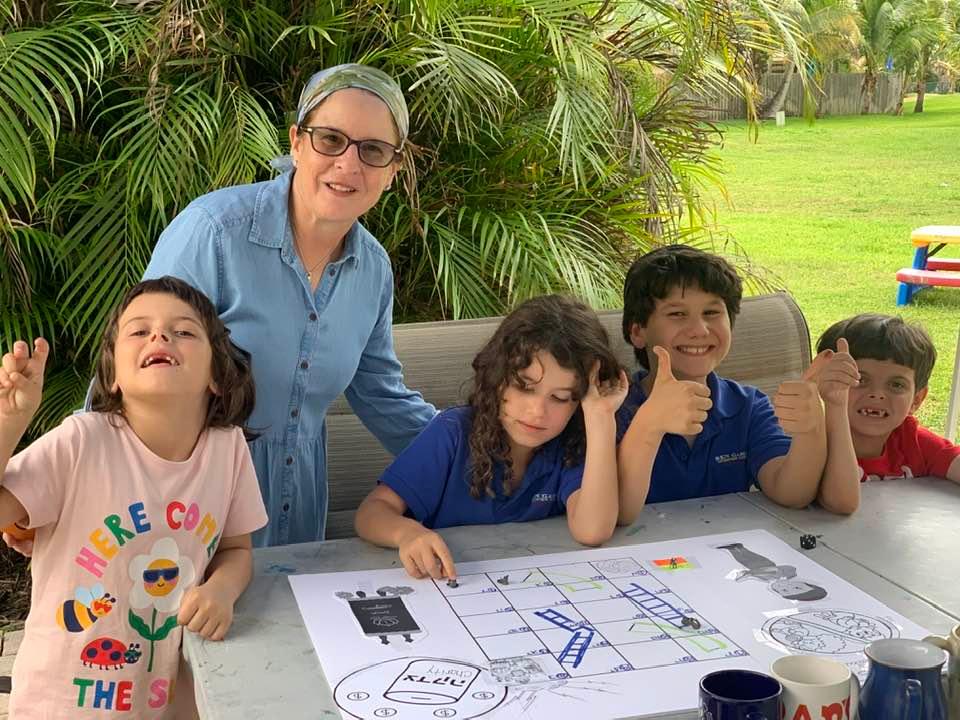
At Living Torah, children don’t just learn about Judaism—they become part of it. They sing Jewish songs, act out Torah stories, learn prayers through music and movement, celebrate holidays, make things, ask big questions, and serve their community together.
We are a small, warm community where children can develop a genuine love for Jewish life while building a strong foundation in Torah, prayer, Jewish values, and tradition.
No prior Hebrew knowledge is required. No particular Jewish background is required.
What happens at Living Torah?
Every week, we bring Judaism to life through a combination of:
Torah & Jewish Stories
Children become familiar with the people and stories of the Torah—Abraham and Sarah, Jacob and Esau, Joseph and his brothers, Moses and Miriam, David, Ruth, Esther, and many others.
We don’t simply tell the stories. We act them out, sing them, ask questions about them, and explore what they might teach us about our own lives.
We also draw on midrash, rabbinic stories, Jewish literature, and Hasidic tales to introduce children to the richness of the Jewish storytelling tradition.
Drama & Imagination
Drama is a central part of our approach.
Children might become Abraham welcoming a stranger, Miriam leading the Israelites in song, Esther deciding whether to speak up, or Joseph facing his brothers after years apart.
Through acting, improvisation, movement, and play, children experience Jewish stories from the inside.
Jewish Music
We sing throughout the program—Jewish songs, holiday music, prayers, and songs from the Jewish tradition.
Music isn’t an occasional activity. It is one of the ways children learn to remember, participate, and feel connected to Jewish life.
Prayer & Jewish Practice
Children learn prayers because we actually use them together.
Our classes begin with prayer and song, and our shared snack gives us an opportunity to practice the blessings over food. As the year progresses, children encounter prayers and blessings for Shabbat, holidays, Torah, and other parts of Jewish life.
Hebrew is integrated naturally into all of this. Rather than spending hours learning Hebrew vocabulary that children rarely use, they encounter Hebrew words in the context of prayer, songs, stories, holidays, and Jewish life.
✂️ Making & Creating
Jewish learning is hands-on.
Children will create holiday projects, make things for our celebrations, and contribute to a large communal Torah created by the children themselves, using pictures and visual storytelling to record the stories and ideas they encounter throughout the year.
Before Passover, for example, children will make their own seder plates and prepare for the experience of the seder together.
Jewish heads, Jewish hearts, Jewish hands
We want children to leave Living Torah with more than a collection of Jewish facts.
We want them to develop Jewish heads, hearts, and hands.
Jewish heads: knowing the stories, people, holidays, prayers, and ideas of our tradition.
Jewish hearts: loving God and Torah, loving our fellow Jews, and learning to view other people with kindness and generosity.
Jewish hands: putting Jewish values into action—welcoming others, giving, helping, serving, celebrating, praying, and participating in community.
Throughout the year, children will explore Jewish ideas such as chesed (lovingkindness), kavod (honor), tzedakah (righteous giving), teshuvah (return and repair), rachamim (compassion), emunah (faith and trust), and kedushah (holiness).
These aren’t just words to memorize. We ask: When is chesed called for? What does it actually look like? How do we repair a relationship? What does it mean to treat another person with kavod?
Judaism doesn’t end when class ends
Living Torah is a community, not simply a weekly class.
Monthly Shabbat Gatherings
Once a month, children and families come together to celebrate Shabbat—with prayer, blessings, songs, Torah, food, and time together.
Monthly Community Service
Once a month, we leave the classroom and serve together in our broader community. Children experience firsthand that Jewish values are meant to become actions.
Celebrating the Jewish Year
Children will prepare for and celebrate the major holidays together, including Sukkot, Hanukkah, Purim, Passover, Lag BaOmer, and Shavuot.
We’ll also mark special moments such as Tu BiShvat, Yom HaShoah, and Israel Day in age-appropriate ways.
A small program with a big experience
Living Torah is intentionally small. With a group of approximately 5–10 children, we can know each child, adapt to the group, and create the kind of environment where children feel comfortable asking questions, taking creative risks, singing loudly, and becoming part of the community.
You do not need to belong to a particular denomination—or even have a particularly strong Jewish background—to join us.
We simply ask families to come ready to learn, participate, explore, and experience Jewish life together.
Come be part of Living Torah.
A year of stories to enter.
Songs to sing.
Questions to ask.
Things to make.
Values to live.
And a Jewish community to grow with.
Ages: 5–10
Schedule: Wednesdays, 3-4:30
Location: Kol HaLev, 9312 Spanish Moss Rd, Wellington
Enroll at https://link.waveapps.com/767tx9-ge5492
Questions? Contact Rabbi David Siff at rabbi@kolhalevpbc.org.